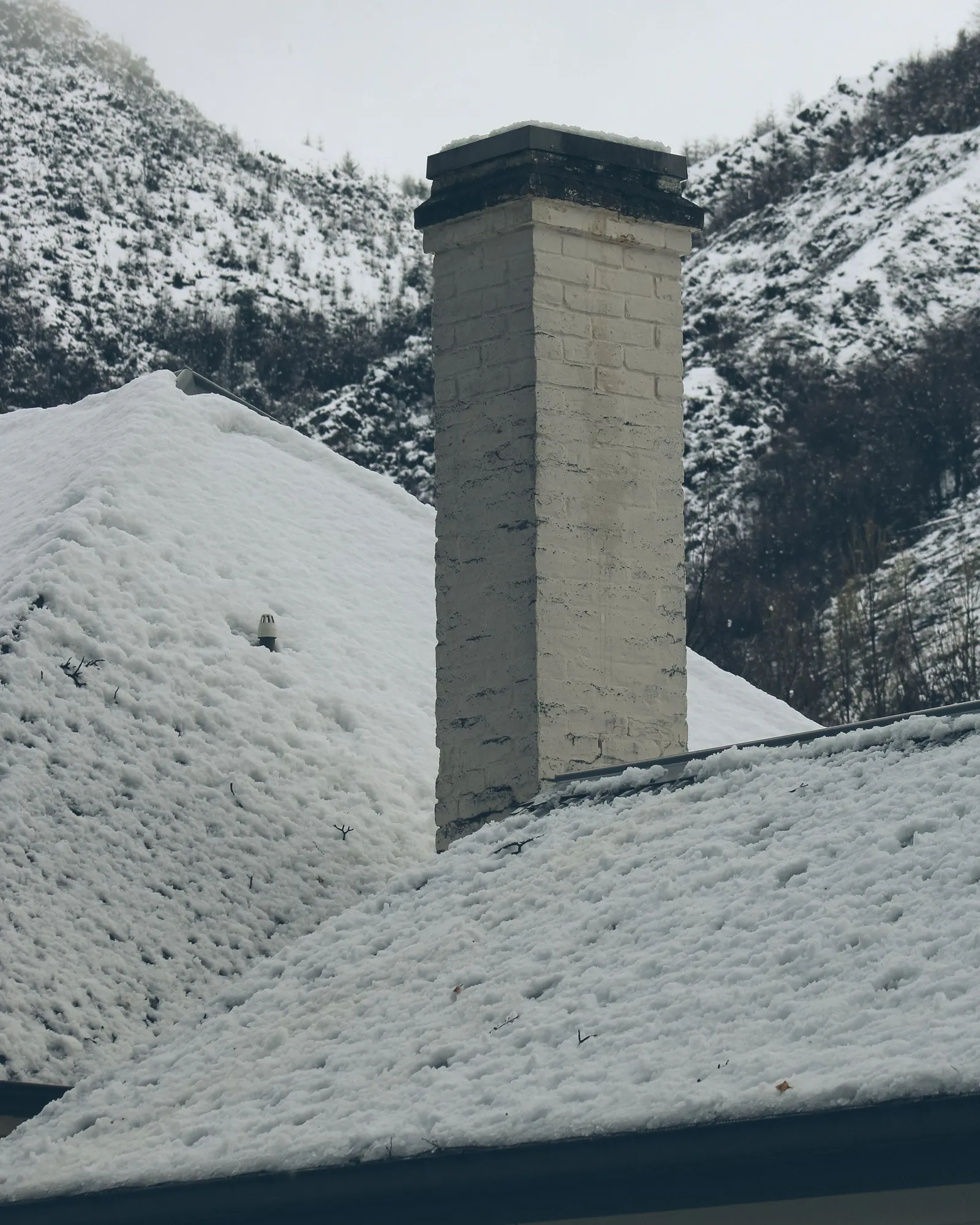
135 freeze-thaw days a year: why Denver chimney crowns crack
Denver's temperature crosses freezing about 135 days a year, based on NOAA 1991–2020 normals. Water soaks into small cracks in the crown, freezes overnight and expands, then thaws in the afternoon sun. Repeated all winter, that splits the crown and lets water into the bricks and flue below.
Denver Fireplace & Chimney · October 15, 2026
Where the 135 comes from
NOAA's 1991–2020 climate normals for Denver-Stapleton, the city's long-running central weather station, show about 156 nights a year at or below 32°F. Only about 21 days a year stay below freezing all day. Subtract one from the other and roughly 135 days a year go below freezing at night and back above it during the day. That is about one day in three.
Denver International Airport works out almost the same, about 134, and we cross-checked both against NOAA's daily records. Boulder comes in a little lower at about 125, but it gets far more snow: 92.8 inches in a normal year against 49 inches at Denver-Stapleton.
The pattern is the problem. Many colder places freeze in December and stay frozen. Denver's bright sun warms masonry quickly, so the same chimney freezes and thaws over and over through the winter.
How the cycle breaks a crown
The crown is the concrete or mortar slab on top of a brick chimney, around the flue. It is the chimney's roof. It takes the snow, the hail and the full force of sun and cold.
Concrete and mortar soak up water. When that water freezes it expands, and it pushes on the material around it. A hairline crack takes in a little water, freezes, opens slightly wider, and takes in more water at the next melt. With about 135 cycles a year, a crack that looked harmless in October can be a gap by March, and the corners of the crown start to break off.
Once the crown leaks, the damage moves down. Water gets into the top courses of brick, which then spall, shedding their faces. It runs down the outside of the flue tiles and can show up as a stain on the ceiling or as water in the firebox.
Why so many crowns were built to fail
Many crowns aren't really crowns. They are a layer of leftover mortar troweled over the top bricks, sometimes called a mortar wash. Mortar mixed for laying brick is not made to be a weather cap, and it is often thin at the edges.
A crown built to last is thick enough not to crack under its own movement, slopes away from the flue, and overhangs the brick on every side with a drip edge, so water falls clear of the chimney face instead of running down it. It also has a gap or flexible seal around the flue tile, because the tile and the crown expand at different rates. A crown poured tight to the tile will crack along that line.
Signs your crown is failing
Some are visible from the yard with binoculars. Others only show inside.
- Cracks or missing chunks at the top corners of the chimney.
- Brick faces flaking or popping off near the top of the stack.
- White powdery staining on the brick, called efflorescence, from salts carried out by water.
- Water in the firebox or on the damper after rain or snowmelt.
- A stain on the ceiling or wall beside the chimney.
Repair, replace and protect
Small surface cracks in a sound crown can be cleaned out and sealed with a flexible crown sealer. A crown that is a thin mortar wash, broken at the corners or cracked through is better replaced with a properly formed one. Typical crown work runs $600–$2,200.
When the bricks below have started to break, the job grows: repointing typically runs $500–$2,500 and replacing spalled brick $1,000–$3,500. A water-repellent treatment that lets the brick breathe, typically $300–$800, slows the next round of damage. If the top few courses are too far gone, rebuilding them runs about $1,000–$3,500.
The cheapest moment to deal with a crown is before winter, when the problem is still a crack. Our inspection is free. We go up, photograph the crown and the top of the stack, and give you a written price before any work.
FAQ
More answers
Will a crown repair hold through a Colorado winter?
A sealed hairline crack in a solid crown usually does. A thin mortar wash that has already broken apart won't hold for long, which is why we tell you honestly when a crown needs replacing instead of patching.
Can I seal the flaking brick myself?
Sealing brick that is already spalling traps water behind the face. The source, usually the crown or the mortar joints, has to be fixed first.
Does a chimney cap help the crown?
Yes. A cap that covers the crown sheds water and snow off the top and keeps rain out of the flue. Caps typically run $250–$850.
Is the white staining on my chimney dangerous?
Efflorescence itself is just salt, but it tells you water is moving through the brick. The source of the water is what needs attention.
Keep reading
More from the blog
 Is today a no-burn day in Denver?Denver no-burn days are called Action Days. How to check the 4 p.m. state forecast, the hotline number, who has to stop burning and what still runs.
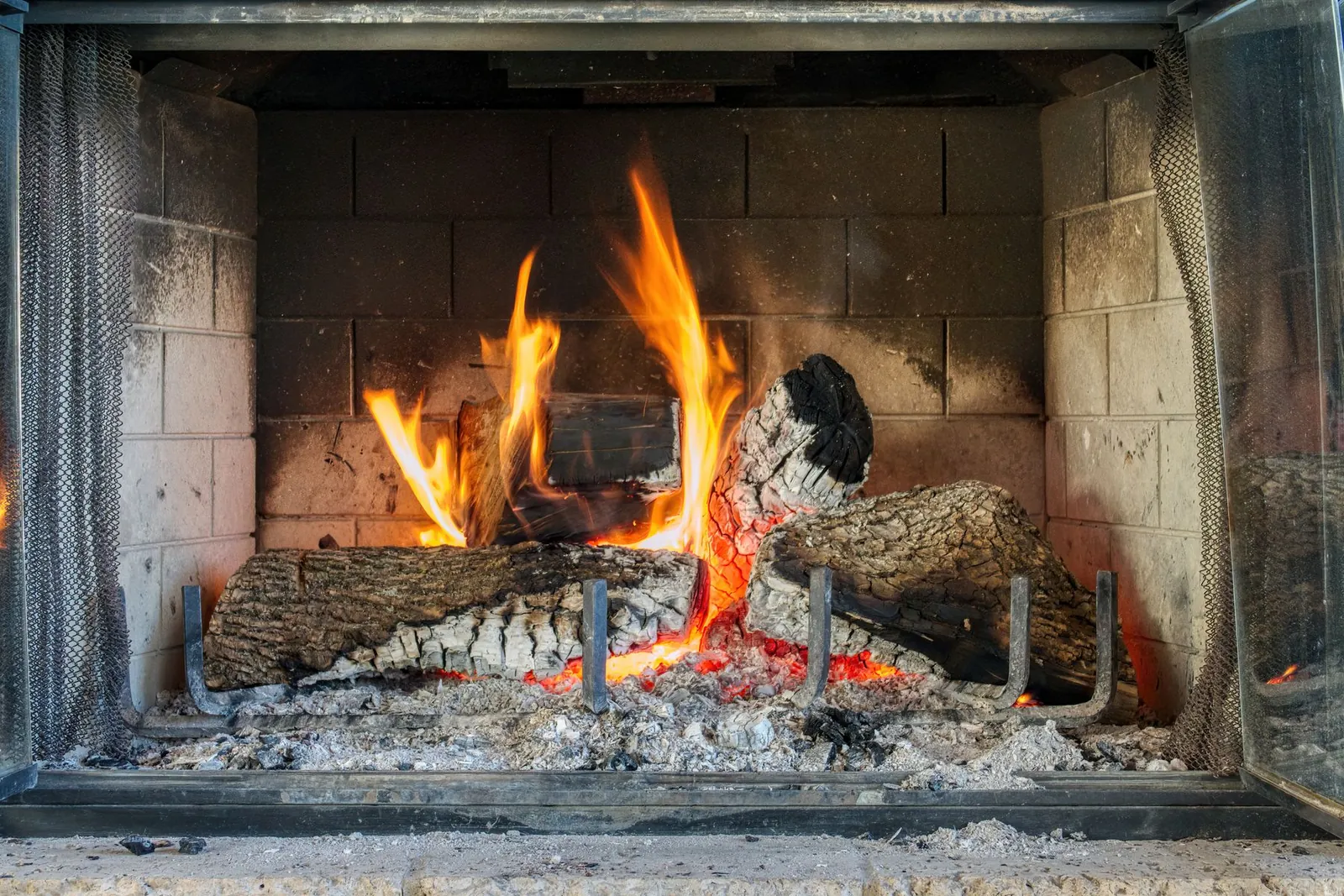 Denver fireplace rules and fines: what the code actually saysBurning on a Denver Action Day carries a $250 minimum fine, up to $2,000 per day. The code sections, what you may burn, and what can be installed.
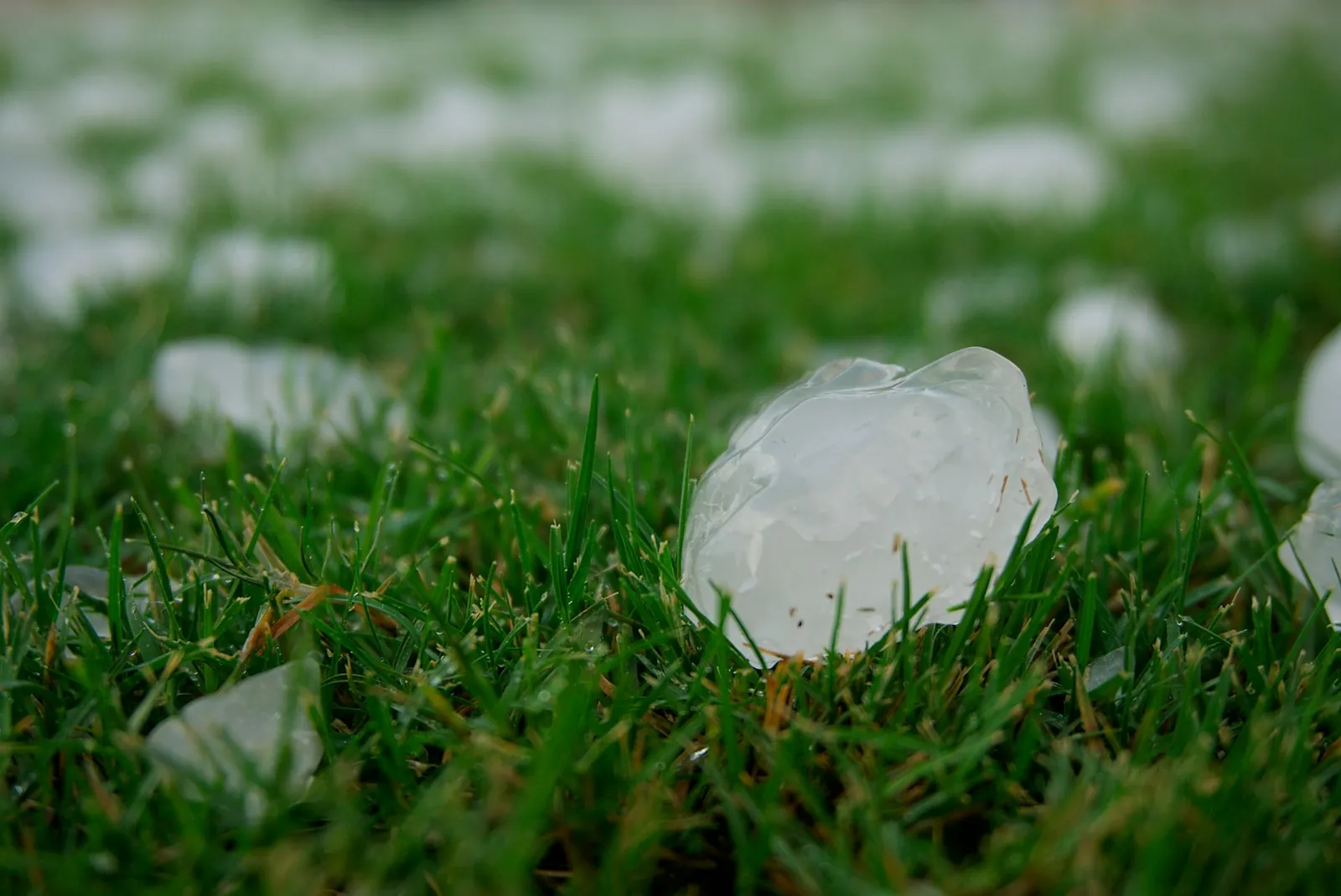 Hail hit your roof? Check these 4 chimney partsAfter a Front Range hailstorm, check the chimney cap, chase cover, crown and flashing. What hail damage looks like on each, and how to document it.
Book online
Pick a day. We'll bring a ladder.
Free inspection in a 3-hour window: 8 to 11, 11 to 2, or 2 to 5. We call to confirm before we arrive.