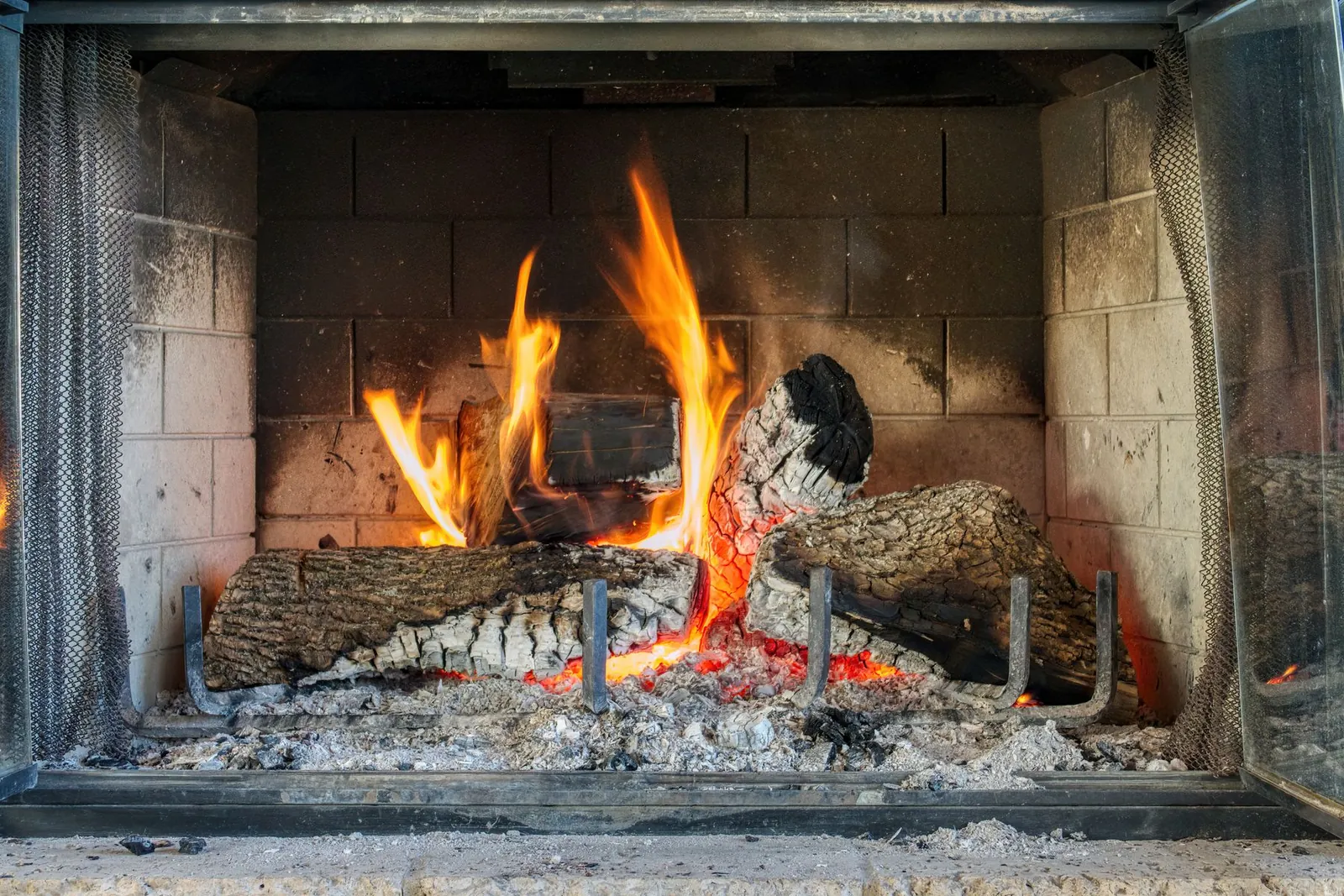
Heavy Creosote Removal for Denver Chimneys
When a flue is coated with crunchy or tar-like creosote, a normal brush pass will not clear it. Heavy removal typically runs $400 to $900; glazed creosote is priced at the inspection.
Creosote forms when smoke cools before it leaves the chimney. Short evening fires, a stove turned down to smolder overnight, and wood that was not dried long enough all make more of it. An outside brick chimney on an older Denver house adds to the problem, because the flue runs cold through the first part of every fire. In a 2014 CBS Colorado story on fighting fires in bitter cold, a Denver Fire Department assistant chief named creosote buildup from local wood as a recurring issue.
What goes into the fire matters as much as how it burns. Colorado allows only clean, dry, untreated wood in any fireplace or stove. Denver's code also bans treated or painted wood, glossy paper, cardboard, yard waste and household trash. Burning those is a violation, and it also leaves a stickier residue in the flue. If the buildup is past what a brush can clear, this is the service you need.
Signs you need this
- A shiny black, tar-like coating in the throat of the fireplace
- Flakes thicker than a coin falling onto the grate
- A strong campfire smell in the house on warm days
- Fires that smolder and smoke instead of catching
- A roar or rumble from the flue during a fire
How we do it
- Measure the buildupWe inspect and photograph the flue, tell you which stage of creosote you have and write down the removal price.
- Break it looseRotary tools with chain or wire heads break crunchy stage 2 deposits off the flue walls, and we vacuum as we go.
- Treat the glazeStage 3 glaze gets a treatment that dries it out so it can be removed, sometimes over more than one visit.
- Check the flue afterWith the deposits gone, the flue walls are finally visible, and we check them for cracked tiles or liner damage left by a hot fire.
What are the three stages of creosote?
Stage 1 is loose, dusty soot that a normal sweep brushes out. Stage 2 is flaky or crunchy, like burnt cereal stuck to the flue walls, and needs rotary tools. That is the heavy removal priced at $400 to $900 in the Denver area. Stage 3 is a hard, shiny glaze, often running down the flue like dried tar.
Glazed creosote is the most dangerous kind because it burns hot and is hard to remove. It is priced at the inspection, after we see how much of the flue it covers, because one short patch and a fully glazed flue are very different jobs.
Did I already have a chimney fire?
Many chimney fires are quiet and nobody notices. Signs we look for afterward include puffy, honeycomb-shaped creosote, a warped cap or damper, cracked flue tiles, and discolored metal on a prefab chimney. If you heard a loud roar during a fire, or saw sparks or thick smoke from the top, stop using the fireplace until it has been inspected.
A fire like that can crack a clay liner even when the outside of the chimney looks fine. Cleaning alone does not fix that, and we tell you plainly if the flue needs a liner before it is safe to burn again.
How do I keep creosote down between visits?
Burn wood that has been split and dried for at least a season, build fires that burn hot rather than smolder, and avoid damping a stove way down overnight. Skip the cardboard and wrapping paper, which are banned in Denver fireplaces anyway.
If you burn often, an EPA Phase III insert burns far cleaner than an open fireplace, and it is one of the devices Colorado allows on Action Days. We can talk through that at the inspection if you are already paying to remove heavy buildup.
FAQ
Creosote Removal questions
How much does creosote removal cost in Denver?
Heavy stage 2 removal typically runs $400 to $900. Glazed stage 3 creosote is priced at the free inspection after we see how much of the flue it covers. You get the price in writing before we start.
Can I use creosote logs instead?
Treatment logs can loosen some light deposits, but they do not remove them, and loosened creosote still has to come out. They are not a substitute for an inspection or for mechanical removal of heavy buildup.
Is glazed creosote a fire risk?
Yes. It is dense and burns very hot, which is how flue tiles crack and fires spread into the framing. We recommend not using the fireplace until it has been treated.
Does a gas fireplace make creosote?
No. Creosote comes from burning wood. A gas fireplace can leave soot if the burner is set up wrong for the altitude, and that is cleaned during gas service.
How long does removal take?
Usually half a day to a full day. Glazed creosote may need a second visit so the treatment has time to work.
Related
Cleaning, inspections and smoke
Book online
Pick a day. We'll bring a ladder.
Free inspection in a 3-hour window: 8 to 11, 11 to 2, or 2 to 5. We call to confirm before we arrive.