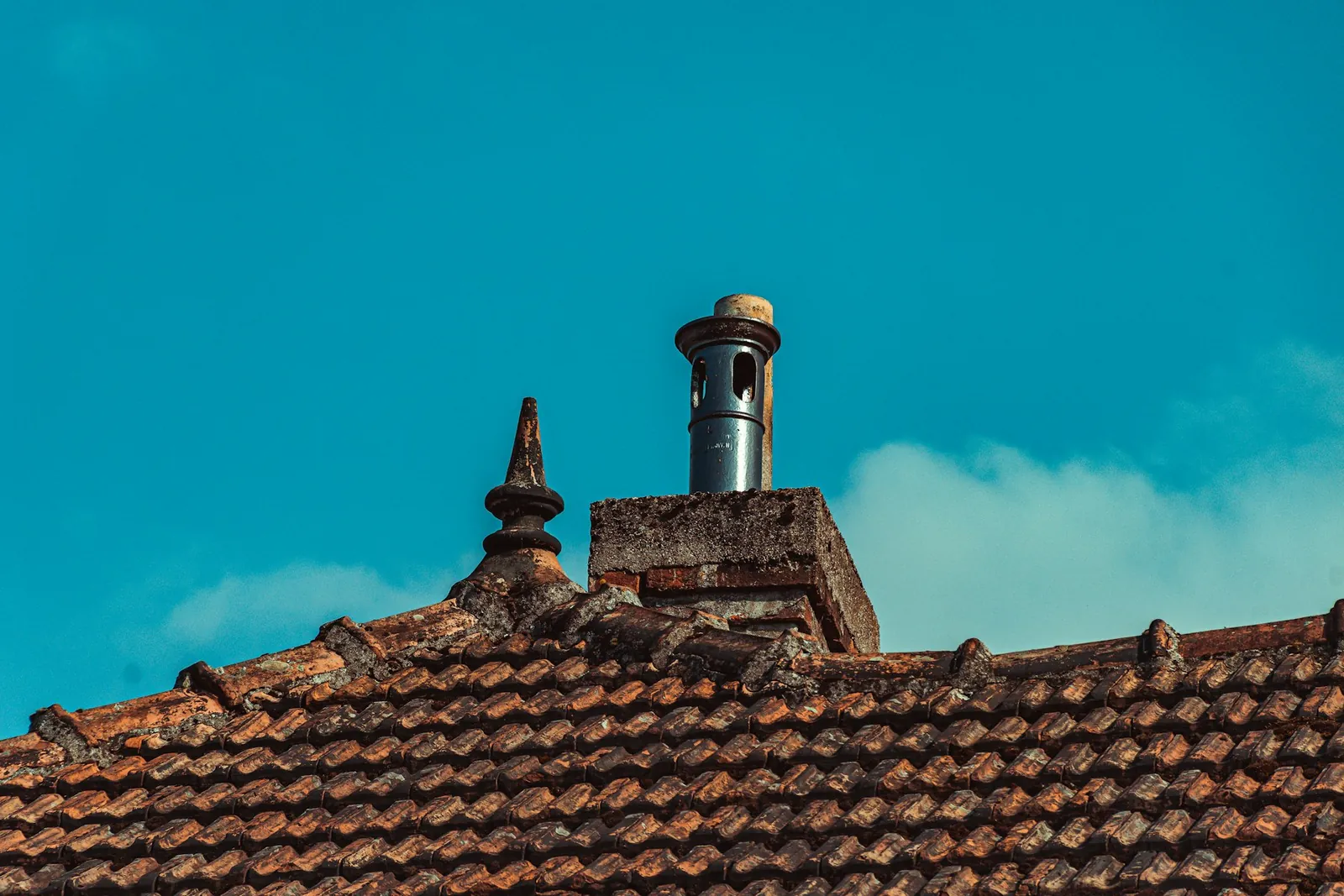
Chimney Liners and Relining in Denver
New stainless steel or cast-in-place liners for cracked clay flues, stove and insert hookups, and gas furnaces or water heaters. Stainless typically runs $1,500 to $5,000.
The liner is the pipe inside the chimney that keeps heat, smoke and combustion gases off the brick and the wood framing around it. In much of the Denver metro, that liner is original clay tile. About 17 percent of Denver homes were built in 1939 or earlier, and in Englewood and Wheat Ridge roughly 35 to 38 percent date from 1940 to 1959. Clay that has been through 60 to 85 winters of freeze-thaw often has cracked tiles and open joints.
We install two kinds of new liner. A stainless steel liner is a continuous pipe dropped down the flue and sized to the appliance, typically $1,500 to $5,000 installed. A cast-in-place liner is a refractory mix poured around a form to rebuild the flue walls, typically $2,000 to $7,000. A liner for a furnace or water heater usually runs $625 to $2,250.
Signs you need this
- Pieces of clay tile in the fireplace or at the cleanout
- An inspection photo showing cracked tiles or gaps between them
- Adding a wood stove, insert or gas insert to an old chimney
- A new high-efficiency furnace leaving the water heater alone in a large flue
- Damp, white crusting inside the flue or at the base
How we do it
- See inside the flueAt the free inspection we check the liner from the top and bottom. If we suspect hidden damage, a camera scan is priced at the inspection before we do it.
- Match the liner to the applianceWe size the liner to the stove, insert, fireplace or gas appliance manufacturer's instructions, because an oversized flue drafts poorly and condenses.
- Install from the roofOld broken tile is cleared, the liner is fed down, connected at the bottom and sealed at the top with a cap plate and rain cap.
- Test and documentWe check draft at the appliance and give you photos plus a written note of the liner type and size for your records and your home inspector.
Do I need a new liner if I only burn gas?
Gas appliances still produce water vapor and acidic combustion gases. In an old clay flue those gases condense on cold tile, which slowly eats the mortar joints. When a furnace is replaced with a side-vented high-efficiency unit, the water heater is sometimes left alone in a flue sized for both, and it may no longer draft well. A properly sized liner fixes that, and it is usually the lower-cost $625 to $2,250 job.
Stainless or cast-in-place: which is right?
Stainless is the usual choice for a wood stove, insert or gas appliance because it is sized exactly and installs in a day. Cast-in-place makes sense when an old masonry flue has many cracks, an odd shape or offsets that a pipe cannot follow, since the mix rebuilds the inside of the chimney itself. We explain which one fits your flue at the inspection.
Does a liner job need a permit?
Most metro cities require a mechanical or building permit to install a stove, insert or new gas appliance, and the liner is part of that work. We check what your city requires before the job. In Colorado, permitted work that replaces a fuel-fired appliance also triggers the carbon monoxide alarm rule in C.R.S. 38-45-102: an alarm within 15 feet of each bedroom.
FAQ
Chimney Liners & Relining questions
How much does a chimney liner cost in Denver?
A stainless liner typically runs $1,500 to $5,000 installed, a cast-in-place liner $2,000 to $7,000, and a furnace or water heater liner $625 to $2,250. We give you a written price at the free inspection.
How do I know my clay liner is cracked?
You often cannot tell from the fireplace. Tile shards at the bottom, damp crusting or a failed draft are clues. We look from the top and bottom, and recommend a camera scan only when something hidden is suspected.
Can I use my fireplace with a cracked liner?
We do not recommend it. Cracks let heat and gases reach the brick and nearby wood framing. The safe step is to stop using it until the flue is repaired or relined.
Do I need a liner for a new wood stove or insert?
In almost every case, yes. Stove and insert makers specify a flue size, and an old fireplace flue is usually much larger. A matched stainless liner keeps the draft strong and the flue easier to clean.
How long does relining take?
A stainless liner is usually done in one day. Cast-in-place takes longer because the mix needs time to set, so plan on two or more days.
Book online
Pick a day. We'll bring a ladder.
Free inspection in a 3-hour window: 8 to 11, 11 to 2, or 2 to 5. We call to confirm before we arrive.